It is 9:02 and you are going to do the hard thing.
Then: which file was it. Open the laptop, six windows from Friday. Slack has a red dot on it, that will take a second. Actually what was the plan, it was in a note somewhere. Phone buzzes. You should probably answer that first while you think about it.
It is 9:40. You are reading something about interest rates.
Nothing went wrong there. No willpower failure, no crisis. You simply walked down a path that was already built, and the path did not lead where you wanted to go.
The idea, named
Choice architecture. Richard Thaler and Cass Sunstein, Nudge, 2008.
Their argument, compressed: there is no neutral way to present a choice. Every arrangement of options has a shape, and the shape moves behaviour. Which option is the default, what order things appear in, how many steps stand between wanting a thing and having it. None of that is decoration. It is all doing work, whether or not anybody designed it on purpose.
Their central practical claim is the one worth carrying around: the default wins. Not always, not for everybody, but reliably enough that if you set the default well you change what most people actually do, without persuading anyone of anything.
Thaler, R. H., & Sunstein, C. R. (2008). Nudge. Cited by author and title, which for a book is the whole citation. There is no DOI on this one and no link, because there is no journal article to link to.
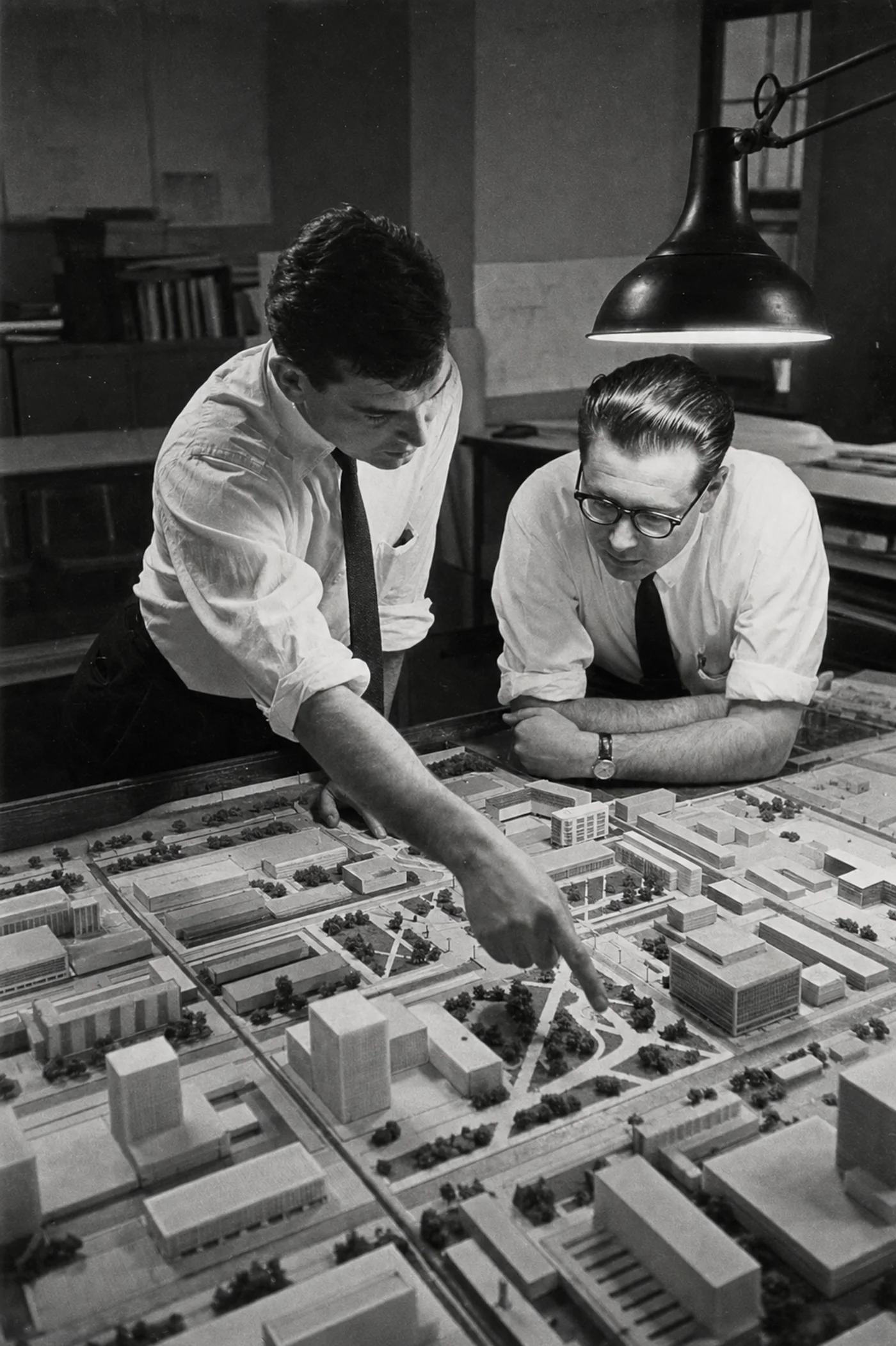
Your morning has a choice architecture. You just did not design it.
That is the uncomfortable translation, and it is the reason this mechanism is worth more than it looks.
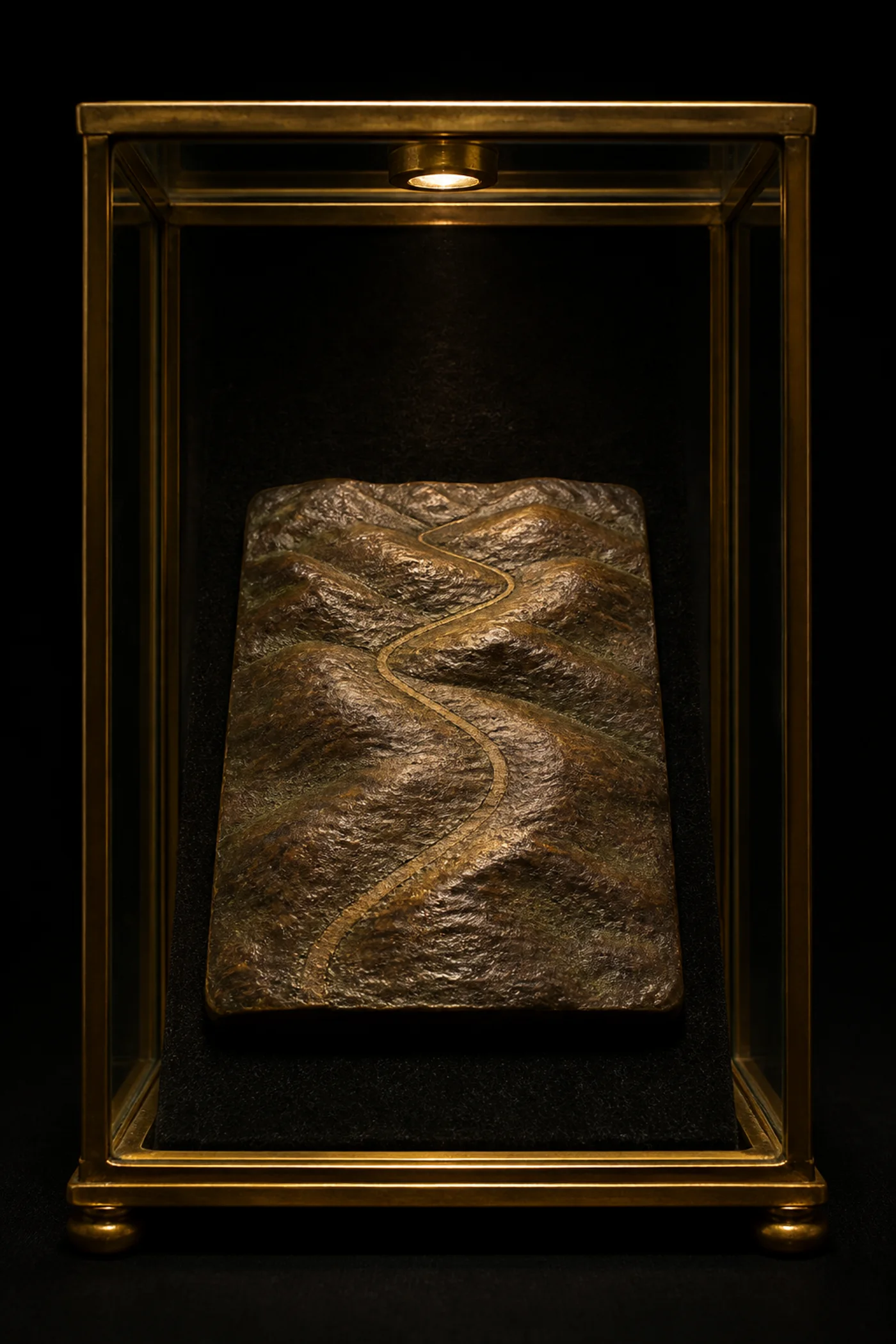
Between "I want to work" and "I am working" there is a corridor, and you have to pass through it every single morning. Count what is actually in yours right now.
What am I working on. Where is that. Which of these nineteen tabs. Is there anything urgent first. Is now a good time or should I do the easy thing first while I warm up. Should I check the phone before I start so it does not interrupt me later.
Every one of those is a decision point, and every decision point is a place where the morning can end. Not because any single one is hard. Because there are six of them and each one is an opportunity to go somewhere else, and one of the exits leads to interest rates.
Every decision you have to make between wanting to work and working is a place the morning can end, and you built most of them yourself.
Notice also what you have been trying instead. You have been trying to be the kind of person who walks that corridor without taking any of the exits. That is a fair amount of effort spent, every day, on a problem that could be deleted rather than survived.
The honest note on where this sits
There is no effect size in this piece because there is no single study, and I am not going to invent one.
Nudge is a synthesis of a large body of behavioural work rather than one experiment with a number attached to it. The particular claim I am leaning on, that friction and defaults move behaviour more than intention does, shows up all over that literature. But the thing I am citing is a book, and a book gets cited as a book.
If you want the piece in this series with the hardest number behind it, that is implementation intentions, where 94 independent tests give you d = .65. This one is architecture, not arithmetic.
The lineage, credited
The direct parent of what I built is Matthew Larsen's Work Form System: a 60-minute unit, a written record of every hour, a wall of documents you read back, a small group that knows whether you showed up. Larsen is openly assembled from Hill on autosuggestion, Maltz on self-image, Cardone on 10X sizing, Hormozi on beliefs, traits and skills, Jobs via O'Leary on signal versus noise, Clear on the habit loop.
His step one is Environment Design, and the ordering is the argument. Before the goals, before the timer, before any of the measurement: the room. Phone out of it. Everything staged the night before. Nothing in reach that leads anywhere else.
He does not call it choice architecture. He is doing it exactly, and he is doing it at the only point where it is cheap, which is the night before, when the decision costs you nothing because you are not currently trying to start.
What we add is that ours does not depend on you owning a spare room or remembering to stage it.
What we built
One address, and then almost nothing to decide.
You go to the booth. It asks what you are doing, in one box, and it will not let you in without an answer. You hit the lock-in. The timer owns the rest.
WHERE THIS LIVES IN THE PRODUCT
Look at what is not in that corridor. There is no start time to pick, because sessions run on the hour and the half hour and the clock is not negotiable. There is no deciding whether to begin, because a person is already on the other tile. There is no choosing when to stop, because the box does not extend.
The one decision left is the one that should be there: what am I working on. That question has 94 studies behind it and it takes eight seconds.
For Full Access there is one more piece of staging. You write tomorrow's four the night before, and the next day your intentions come pre-filled from what you wrote. The corridor gets shorter again, and it gets shorter at the moment of the day when shortening it is free.
The ask
Stop trying to be better at the corridor. Go and delete part of it tonight.
Pick the single decision that most often ends your morning. Mine was what am I working on, every time, for years. Then make that decision the night before, in writing, while it costs you nothing.
That is choice architecture at the household scale, it takes four minutes, and it beats any amount of resolve you can generate at 9:02 tomorrow.
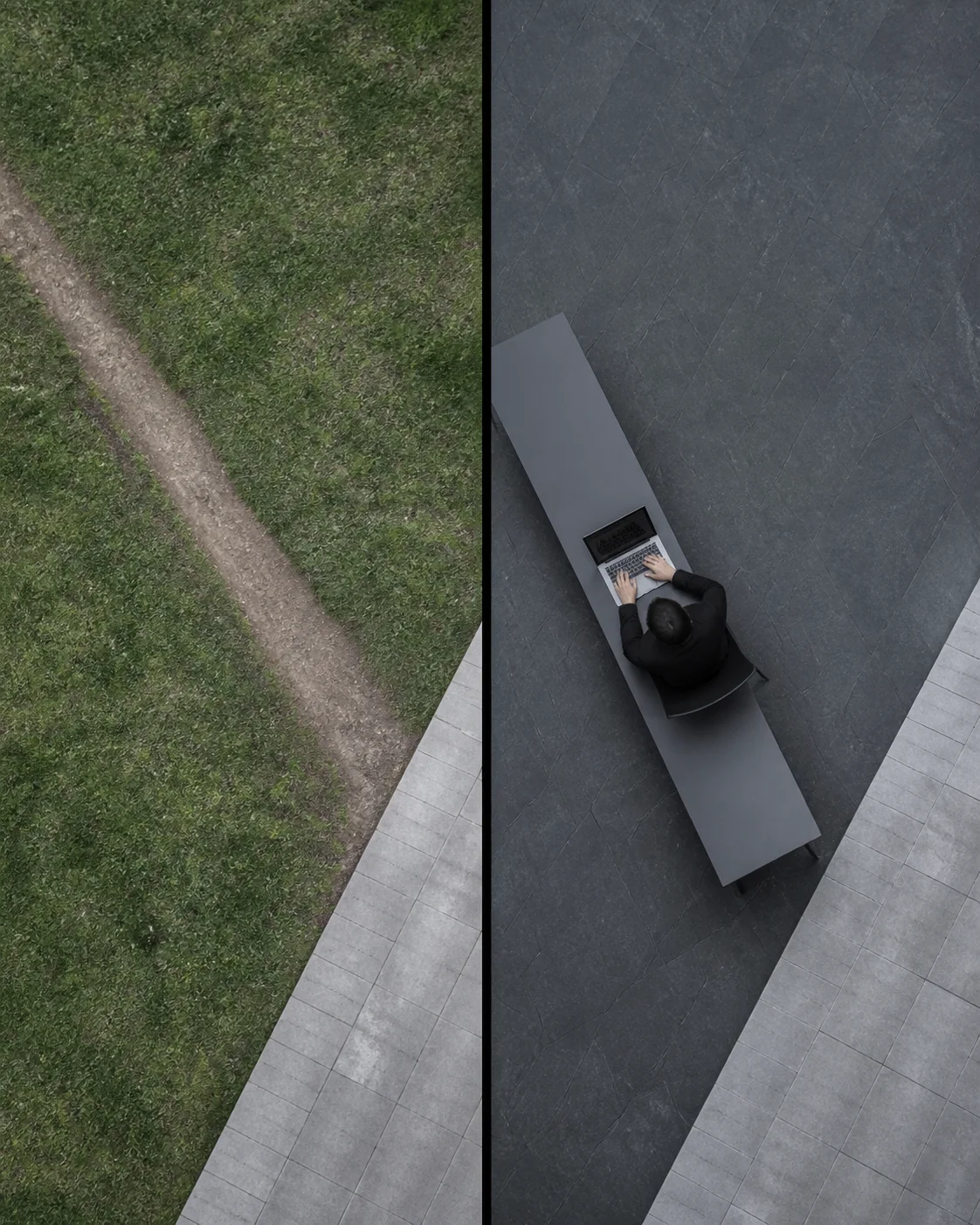
That's why I built this. I needed it. I spent about a decade trying to become someone with better mornings, when what I actually had was six exits and a lot of confidence.
Sources
- Thaler, R. H., & Sunstein, C. R. (2008). Nudge: Improving Decisions About Health, Wealth, and Happiness. Book, cited by author and title, no DOI.