It's 9:04 in the morning. Claude Code is open. You have a plan and the plan is genuinely good. Three things, all of them shippable by lunch.
Then you check one thing. Then you check the thing that the first thing reminded you of. Somewhere in there you answer a message, because answering it takes eleven seconds and not answering it takes up a slot in your head all day.
At 2:15 you look up. The branch is exactly where you left it.
So you reach for the explanation everybody reaches for. You spent your willpower on the morning. There wasn't enough left for the hard thing. Tomorrow you'll protect it better.
I ran that loop for about fifteen years. It felt true every single time.
It isn't.
The idea, named
Ego depletion is the model. Roy Baumeister's lab put it on the map in the late nineties, and the shape of it is simple enough to fit on a napkin: self-control draws on a limited resource, the resource gets used up, and once it's gone your next act of self-control fails. Resist the cookie, botch the spreadsheet. A fuel tank. A muscle that fatigues.
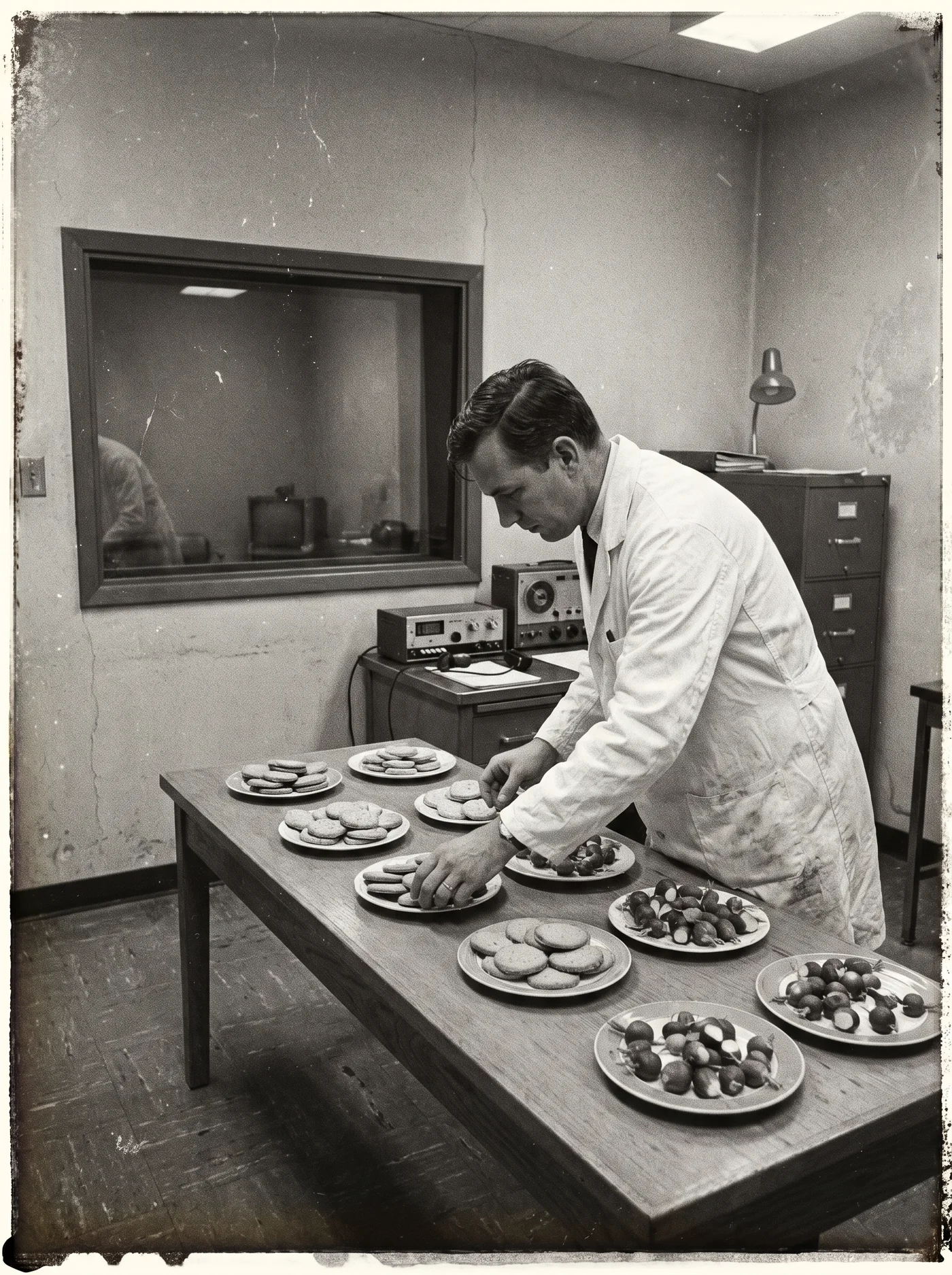
I want to be fair to it. It's a beautiful idea. It explains your Tuesday. It matches how being fried actually feels from the inside. It generated hundreds of studies and roughly the entire modern productivity industry. Eat the frog. Protect your morning. Decision fatigue. The founder who wears the same grey shirt every day so he doesn't spend self-control on trousers.
Then somebody checked.
The number
In 2016, Martin Hagger and Nikos Chatzisarantis coordinated a preregistered multilab replication. Twenty-three labs. 2,141 participants. Same protocol everywhere, registered in advance, analysis plan locked before any data came in. The scientific equivalent of calling your shot before you swing.
The authors' conclusion: if there's an effect at all, it's close to zero.
Hagger et al. (2016), Perspectives on Psychological Science, 11(4), 546 to 573. journals.sagepub.com/doi/10.1177/1745691616652873 Data and protocols are open: osf.io/jymhe
Twenty-three labs. Two thousand people. Nothing there.
Every protect-your-willpower system I ever paid for was a beautifully designed protocol for defending a room with nothing in it.
Why I'm leading with a debunk instead of burying it
This is the part where I'm supposed to hedge, because I'm about to tell you about something I built, and I just spent four paragraphs taking apart the mechanism most people in my position would use to sell it to you.
I'm leading with it because the debunk is the product decision. It's not a fun fact I bolted on. It's the fork in the road.
If willpower is a tank, the correct product is a tank-management system. Schedule the hard thing early. Ration your decisions. Guard the first two hours. That's what I bought, over and over, for years. Every one of those systems was a beautifully designed protocol for defending a room with nothing in it.
If willpower is not a tank, the question changes completely. It stops being "how do I spend my limited self-control wisely" and becomes "how many decisions can I delete from the moment, so there's nothing left to spend."
Two different questions. Two entirely different products. I know, because I bought the first one about nine times before I built the second one.
The lineage, credited
I didn't invent this stack and I'm not going to act like I did.
The direct parent is Matthew Larsen's Work Form System, and Larsen is openly assembled from other people: Napoleon Hill on autosuggestion, Maxwell Maltz on self-image, Grant Cardone on 10X sizing, Alex Hormozi on beliefs, traits and skills, Steve Jobs via Kevin O'Leary on signal versus noise, James Clear on the habit loop. Larsen's own contribution is the spine. A 60-minute unit. A written record of every hour. A wall of documents you read back. A small group that knows whether you showed up.
We're one more layer on the same stack, and I'd rather say that out loud than get caught.
What we add is one thing. Larsen's accountability is asynchronous. You finish the hour, you fill in the form, the ping goes out to your group afterward. Focusmate has the opposite problem: a real human on camera, no protocol running underneath. We sit in the overlap. A person on your screen during the hour, with the measurement layer running quietly underneath it.
What "deleting decisions" actually looks like
Not a philosophy. A booth.
Here's what's live right now, on the free plan:
You book a slot with a named partner. That's a human being who now expects you at six.
Sessions start on the hour and the half hour, so you don't get to negotiate a start time with yourself at 6:04.
You cannot get into the room without typing what you're going to do. Not a category. A sentence. The box is required and there is no skip button, and yes, people have asked.
The camera is on. Mics are locked during the work phase, because the point isn't to chat. The point is that somebody is there.
The timer runs fifty minutes and it starts whether or not you feel ready. Then ten minutes to talk about what happened.
At the end you say whether you did the thing you said you'd do, and your partner sees the answer.
Now count what I just removed. When to start: gone, it's the next tick. What to work on: gone, you typed it. Whether to actually begin: gone, someone is looking at you. When to stop: gone, the clock owns that. Whether it counted: gone, there's a record and a witness.
There is nothing left to decide, so there's nothing left to run out of.
WHERE THIS LIVES IN THE PRODUCT
Members on Full Access get a layer under that called Deep Mode, where tomorrow's four hours are planned the night before, so the intention is already sitting in the box when you arrive. Five goals, each with a number, a deadline and a reason. A wall you print and hang. A quiet counter that notices when you leave the tab. Not one of those is willpower management. Every one is a decision deleted before you got anywhere near the moment it mattered.
The uncomfortable part
You're probably still running a tank-management system. Most people are. Go check yours against the replication.
If your setup is mostly rules about when to do the hard thing and how to protect your morning energy, you're defending the empty room. It'll work fine on the days you were going to be fine anyway. It'll fail on exactly the days you needed it. And then you'll blame yourself, because that's what the model tells you to do. You ran out. You should have had more.
Twenty-three labs went looking for the thing you're blaming yourself for having too little of. They couldn't find it.

That's why I built this. I needed it. I still book the hour like everybody else, and the only reason I show up is that somebody is on the other side of the screen at 6:00 whether or not I feel like a person who ships today.
Sources
- Hagger, M. S., et al. (2016). A Multilab Preregistered Replication of the Ego-Depletion Effect. Perspectives on Psychological Science, 11(4), 546-573. https://journals.sagepub.com/doi/10.1177/1745691616652873
- Open data and protocols: https://osf.io/jymhe/