There is an audiobook you want to finish. There is a gym you do not want to go to.
Katherine Milkman's idea was to make those the same problem.
You may only listen to the audiobook at the gym. Not on the drive. Not on the couch. The book lives in the locker. You want the next chapter, you know where it is.
They ran it properly, and the results are the funniest and most convincing thing in this entire series, because of what people did after the study ended.
The idea, named
Temptation bundling. Chain a thing you want to a thing you should do, and make the want available only during the should.
The move is subtle and worth being precise about. You are not adding motivation to the hard thing. Motivation is not a substance you can pour. You are relocating something you already want so that the only route to it runs through the thing you have been avoiding.
Milkman, K. L., Minson, J. A., & Volpp, K. G. M. (2014). Holding the Hunger Games Hostage at the Gym. Management Science, 60(2), 283 to 299. doi.org/10.1287/mnsc.2013.1784 · PubMed
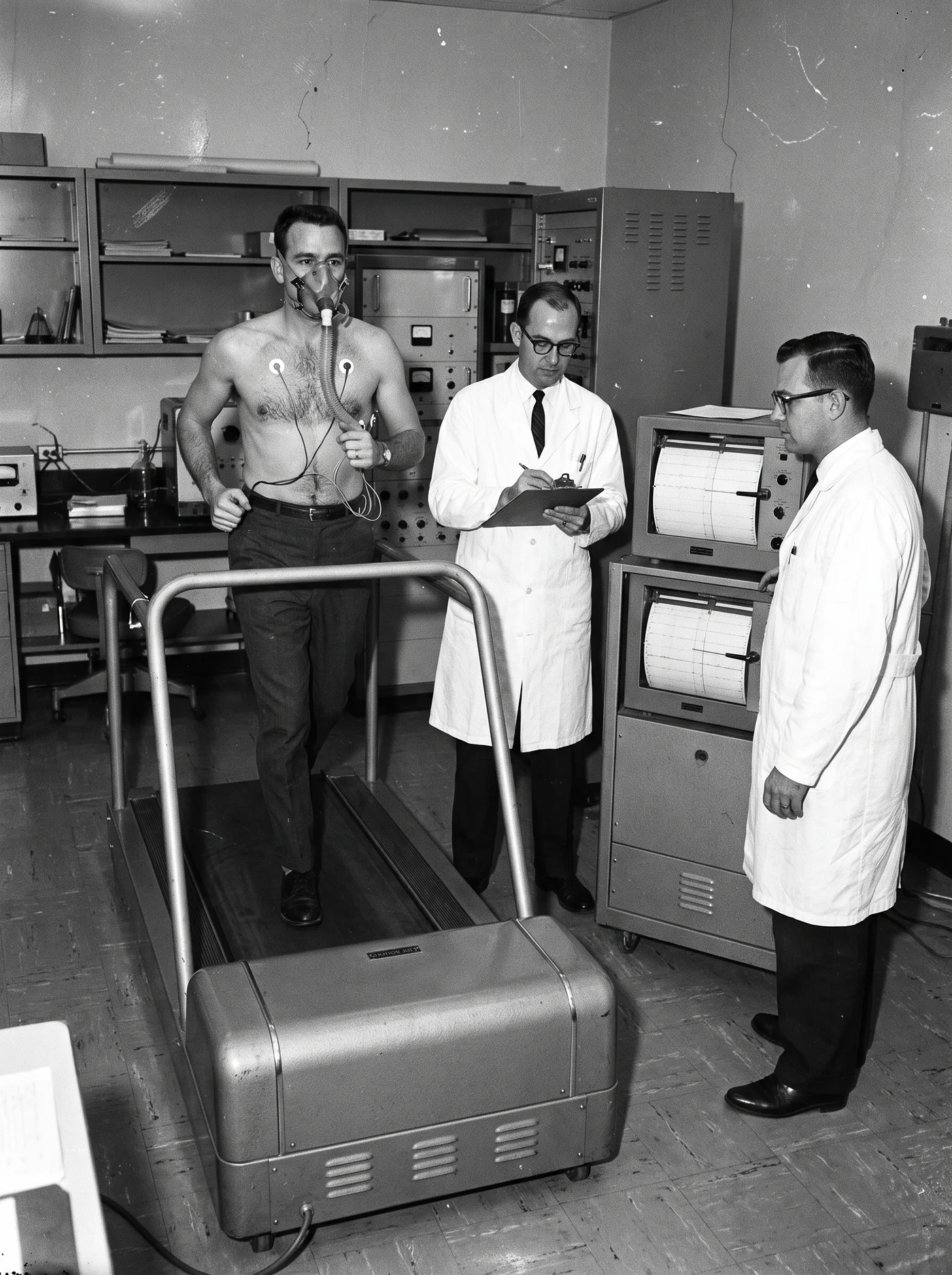
The numbers
Full treatment, where the audiobooks were genuinely locked to the gym: 51% more gym visits.
Intermediate treatment, a softer version: 29% more.
Fifty-one percent is a very large behavioural effect for an intervention whose entire content is "you may only have this here."
But the number that actually settles it is the last one. At the end of the study, when the researchers offered participants the chance to keep the restriction in place, 61% of them paid to do it.
Read that again. They paid money to have something they enjoyed taken away from them everywhere except the gym. Nobody does that out of obedience. They did it because they had discovered what it feels like when the good thing is waiting on the other side of the work, and they did not want to go back.
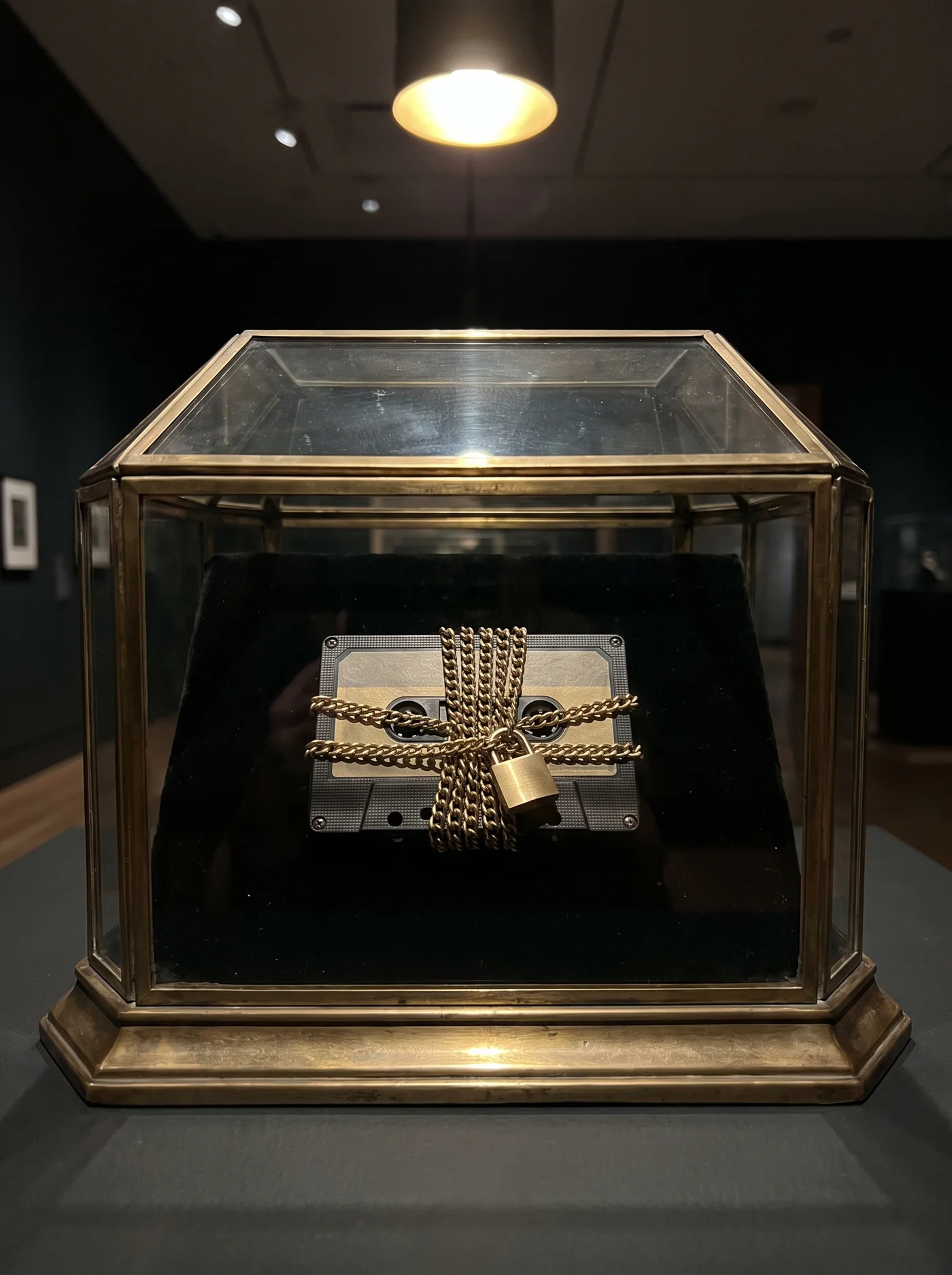
At the end of the study, 61% of them paid money to keep the lock on. That is how good it feels when the reward is gated behind the work.
The honest note
The effect decayed over the course of the study. It faded, and it faded hardest once the routine broke over Thanksgiving.
I am telling you that because it is the single most useful detail in the paper, not despite being the inconvenient bit.
It says the bundle is not magic and it is not permanent. It is a habit structure, and like every habit structure it is held together by the routine around it. Break the routine for a week and you do not lose a little of the effect, you lose most of it.
Which is an argument for a standing block rather than a burst of enthusiasm. A thing at the same time, at the same tick, with the same reward at the end of it, is not a smaller version of a motivational push. It is a different category, and it is the one that survives a Thanksgiving.
The lineage, credited
Matthew Larsen's Work Form System is the direct parent of what I built: the 60-minute unit, the written record of every hour, the wall of documents, the small group that knows whether you showed up. Larsen is openly assembled from Hill, Maltz, Cardone, Hormozi, Jobs via O'Leary and Clear.
His version of this mechanism is coffee. He does not get it until the four hours are done. It is such a small rule that it sounds like a personality quirk rather than a technique, and it is doing exactly what the audiobooks were doing in the locker.
What we add is that the reward is built into the room, so it does not depend on you inventing one and then honouring it. Most people, told to pick a reward, pick something they were going to have anyway.
What we built
The wrap. Every session ends with one, and the good part is at the end of it, on purpose.
There is a JACE drop at the close, generated for that session. Sometimes a clip. The specifics vary, and the variation is not laziness, it is a second mechanism doing its own work underneath: a reward you can predict exactly is a reward you stop noticing.
WHERE THIS LIVES IN THE PRODUCT
The rule the design follows: nothing good arrives early. Not at the fifteen-minute mark, not for a nearly-finished hour. The drop lands after the work, or it is not a bundle, it is a distraction with good branding.
And the last ten minutes turned into a reward I did not design and did not predict. The work phase ends, the mics open, and you talk to the person who just sat with you for fifty minutes. For me it is now the part of the hour I am actually walking toward, which was not the plan.
The ask
You already have the thing you want. That is what makes this the cheapest mechanism on the list.
The podcast, the show, the good coffee, the phone. You are having it constantly, in the gaps, for free, at no cost to yourself and no benefit either. It is currently doing nothing except being available.
Move it. Put it on the far side of one hour of the work you have been avoiding, and make that hour a fixed appointment rather than a resolution, because the paper is clear about what happens when the routine breaks.
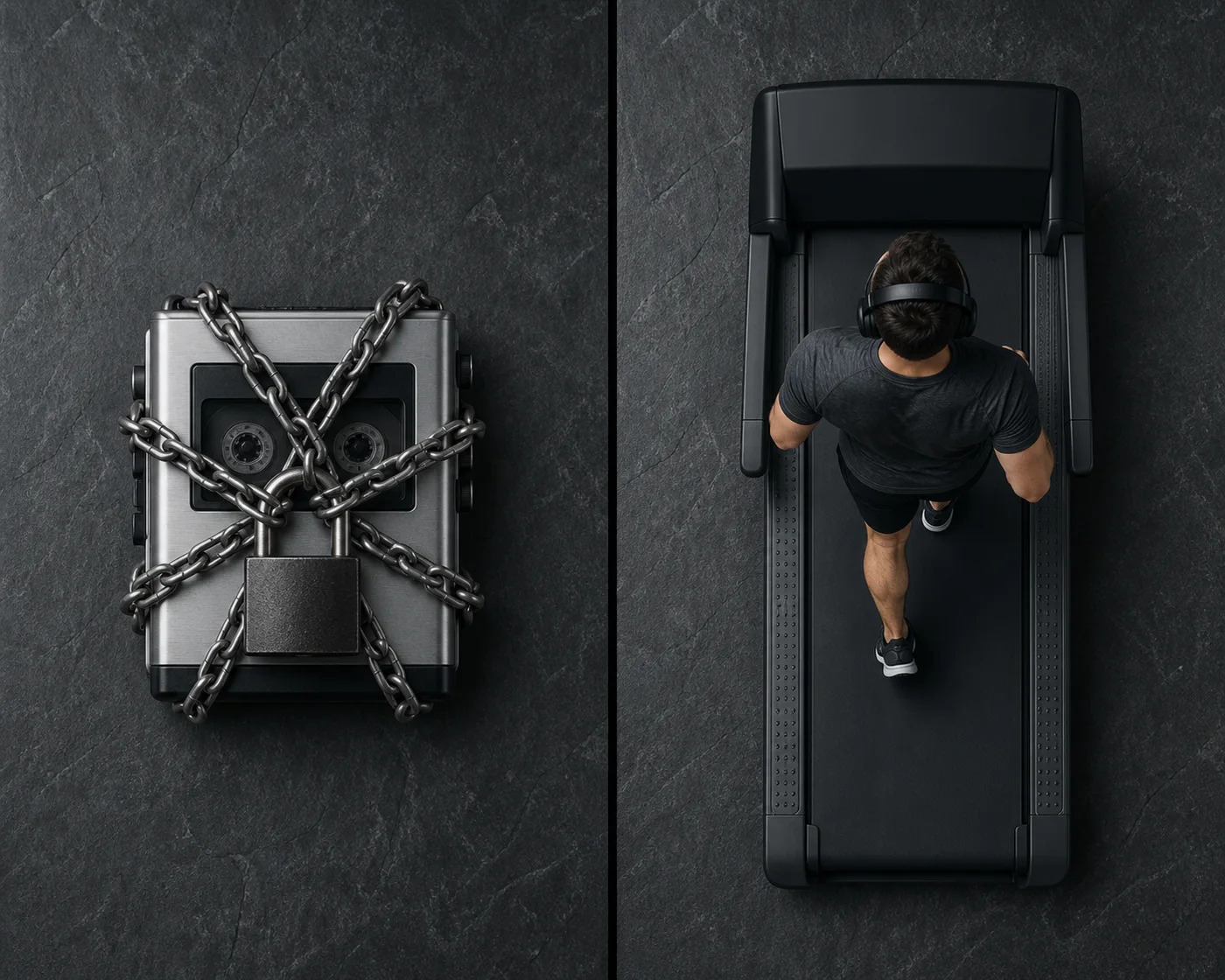
That's why I built this. I needed it. I am extremely susceptible to a reward at the end of a thing and I spent years taking all of them up front.
Sources
- Milkman, K. L., Minson, J. A., & Volpp, K. G. M. (2014). Holding the Hunger Games Hostage at the Gym: An Evaluation of Temptation Bundling. Management Science, 60(2), 283-299. https://doi.org/10.1287/mnsc.2013.1784
- PubMed record: https://pubmed.ncbi.nlm.nih.gov/25843979/