There is probably a chair somewhere that makes you sleepy. A particular cafe where you can always write. A desk that has never once produced good work.
You have explained all of that to yourself as mood, or comfort, or luck.
It is none of those. It is the oldest documented mechanism in psychology, it works on dogs, and once you see it you can build with it deliberately instead of waiting to get lucky with a room.
The idea, named
Classical conditioning, and the part of it that matters here, context-dependent state.
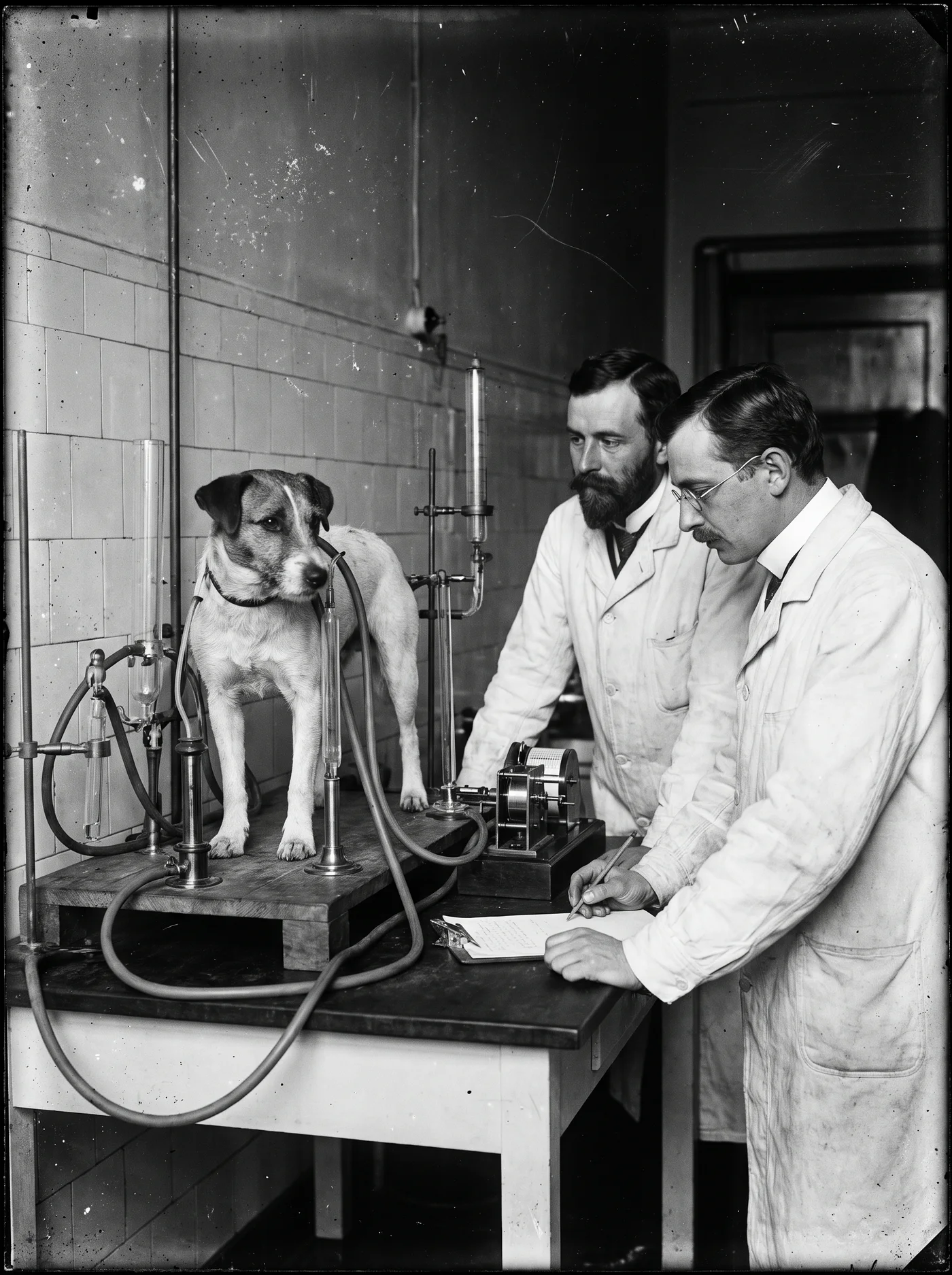
Pavlov, 1927. Everyone knows the headline: a bell that reliably precedes food eventually produces the response on its own. Ring the bell, get the salivation, no food required.
What gets lost in the retelling is the timing, which is the whole point. The response does not arrive with the food. It arrives with the cue, ahead of the thing itself. The organism is not reacting. It is preparing, on the strength of a signal that has been reliable in the past.
Pavlov, I. P. (1927). Conditioned Reflexes: An Investigation of the Physiological Activity of the Cerebral Cortex. Full text at archive.org
Now apply that to focus rather than to salivation. If a particular set of cues has reliably preceded fifty minutes of real work, those cues stop being neutral scenery. They become a signal, and the state starts assembling before you have done anything.
The condition nobody meets
Conditioning requires reliability. The cue has to predict the thing, consistently, or the association never forms and any that had formed decays.
Which is exactly why this does not happen to you by accident.
Your desk precedes deep work sometimes. It also precedes email, admin, three unrelated tabs, a call, and forty minutes of nothing. As a signal it predicts almost nothing, so it conditions almost nothing. Same for your laptop, which you also watch films on, and the hours between nine and eleven, which are deep work on your good weeks and firefighting on the rest.
You are not failing to have a trigger. You have a hundred half-formed ones, all pointing at different states, all diluted to uselessness.
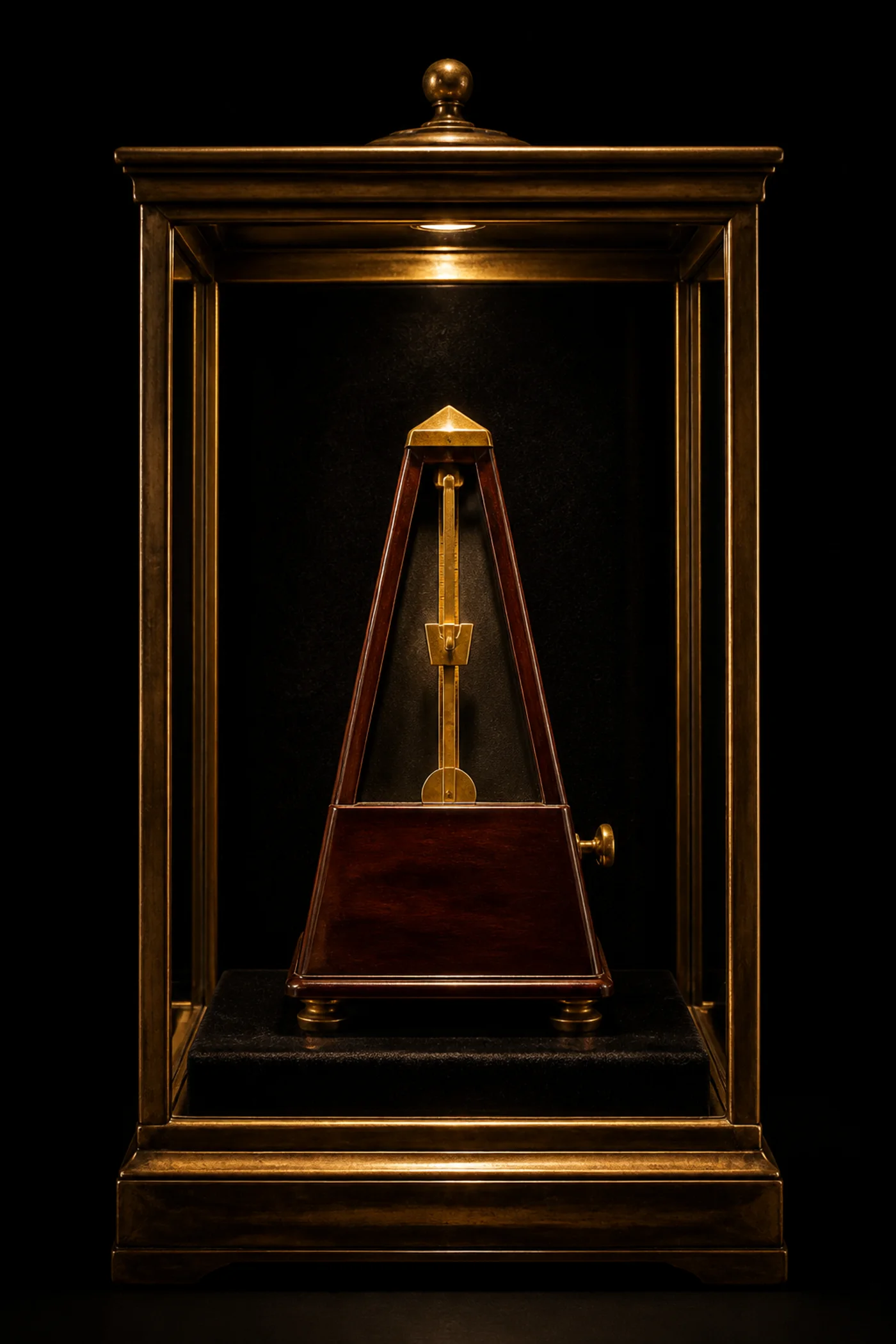
You have been trying to summon a state with your personality. It is much cheaper to build a room that summons it for you.
The lineage, credited
Matthew Larsen's Work Form System is the direct parent of what I built: the 60-minute unit, the written record of every hour, the wall of documents you read back, the small group that knows whether you showed up. Larsen is openly assembled from Hill, Maltz, Cardone, Hormozi, Jobs via O'Leary and Clear.
His step one is Environment Design, and it comes first for a reason. Before the timer, before the form, before any of the measurement: the room. Phone out of it. Everything staged the night before. The space set up so that being in it means one thing.
He is doing conditioning without calling it conditioning, and he is doing the difficult half, which is not building the cue but protecting it. Every other use of that room weakens the signal.
What we add is that ours does not depend on you having a spare room or the discipline to keep it pure. The cue is a place you go to on a screen, and it is identical for everybody, including me.
What we built, and the rule it obeys
One booth. The same one, every time.
Same entry: you type what you are doing before you can get in. Same lock-in step. Same phase clock, lobby then fifty then ten. Same music bed. Same JACE voice at the wrap. Same closing sequence, every session, in the same order.
WHERE THIS LIVES IN THE PRODUCT
Here is the rule, and it is the least glamorous design principle in the whole product: the sequence does not vary.
That is genuinely hard to hold. Every instinct in software says freshen it up, add variety, ship a new wrap experience. Every one of those instincts degrades the cue. A booth that surprises you is a booth that predicts nothing, and a booth that predicts nothing does not pre-load anything.
So the sameness is the feature. It looks like we have not touched it. We have decided not to.
There is exactly one place variation is allowed, and it is deliberate: what actually lands in the drop at the end changes session to session. That is a different mechanism doing a different job, an unpredictable reward, and it sits inside a fixed container rather than replacing it. The frame is rigid. The gift inside it is not.
The cheap version, if you never sign up
You do not need me for this one either, so here it is.
Pick one cue you can keep clean. One playlist that plays during deep work and at no other time. One physical spot, or one specific set of clothes, or one drink. It does not matter what it is. It matters that it predicts one thing only.
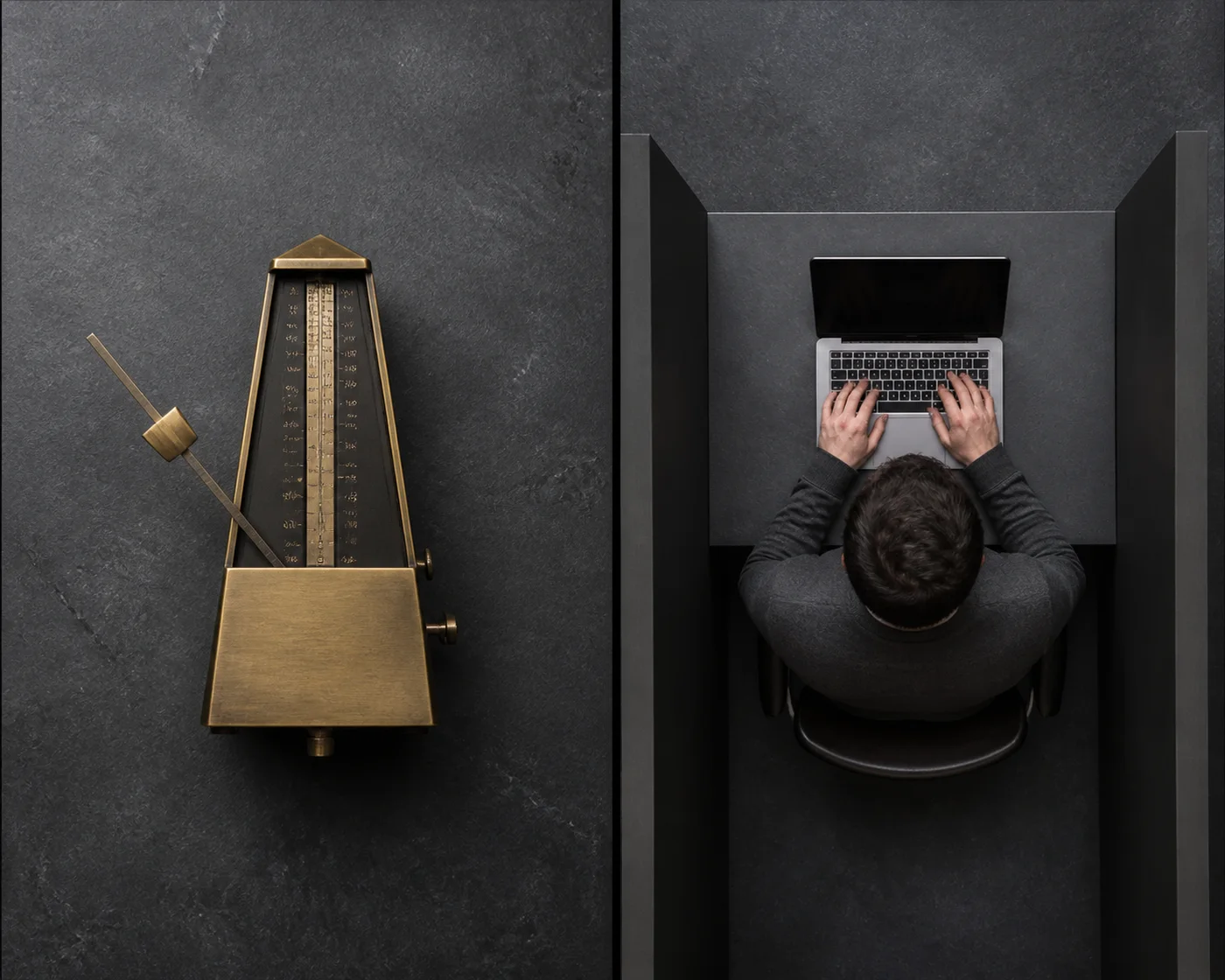
Then guard it. The temptation will be to use it while doing something easier, because it is pleasant and it is right there. That single act is what dissolves it, and it dissolves faster than it built.
That's why I built this. I needed it. I have exactly one room, one sequence, and one voice at the end, and I get more out of the fact that they never change than out of anything clever we have shipped.
Sources
- Pavlov, I. P. (1927). Conditioned Reflexes: An Investigation of the Physiological Activity of the Cerebral Cortex. https://archive.org/details/conditionedrefle00pavl